
Discover which landscaping investments genuinely increase property value and which are unlikely to deliver a worthwhile return.
Your garden is more than just an outdoor space. It’s an extension of your home, a place to relax, entertain and spend time with family. But if you’re planning to invest in your property, one question naturally comes up:
What actually adds the most value to a garden?
The answer isn’t always what people expect.
Many homeowners spend thousands on features that look impressive but add little practical value. Others make a handful of well-considered improvements that transform how the garden functions and significantly increase its appeal to future buyers.
This guide explains where your budget is best invested if your goal is to create a beautiful garden that also adds lasting value to your property.
1. Invest in a High-Quality Patio
For most gardens, the patio becomes the main living space outdoors.
A well-designed patio creates somewhere to entertain guests, dine outside and enjoy the garden throughout the year. It’s often the feature that buyers imagine themselves using first.
The material you choose also matters.
Porcelain paving offers a contemporary appearance with low maintenance, while Indian sandstone provides a more natural character and develops beautifully over time when installed correctly.
If you’re comparing paving materials, you may also find our guide on Porcelain vs Indian Sandstone useful.
Technical Note: Proper sub-base preparation, drainage and installation quality have a greater impact on longevity than the paving material itself. For independent technical guidance, visit the Irish Paving Standard.
2. Improve the Layout Before Adding Features
Many gardens don’t need more features.
They need a better layout.
The most valuable gardens usually have clearly defined spaces, such as:
- An entertaining area.
- A lawn for children or pets.
- Planting beds.
- Practical access routes.
- Storage that doesn’t dominate the garden.
Good landscape design creates flow between these spaces, making even relatively small gardens feel significantly larger.
3. Invest in Quality Planting
Plants create atmosphere.
A thoughtfully designed planting scheme softens hard landscaping, provides seasonal interest and gives the garden maturity.
Evergreen structure combined with seasonal colour generally provides the best balance between appearance and maintenance.
Rather than filling borders immediately, consider investing in fewer, higher-quality plants that will establish well over time.
4. Solve Drainage Problems
Poor drainage quickly reduces both enjoyment and property value.
Standing water, soggy lawns and flooded paving create maintenance issues and often indicate underlying construction problems.
Before installing new paving or lawns, ensure surface water is properly managed through falls, drainage channels and suitable outlets.
If drainage is an issue, our article Can a Landscaper Help with Poor Drainage in My Garden? explains the available options.
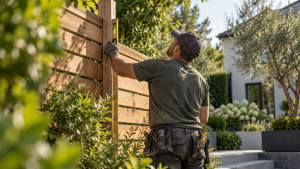
5. Create Privacy
Privacy consistently ranks among the most valuable improvements homeowners can make.
This can be achieved through:
- Cedar screening.
- Mature hedging.
- Pleached trees.
- Carefully positioned planting.
A private garden feels larger, calmer and more usable throughout the year.
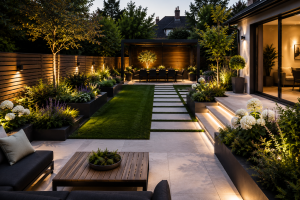
6. Lighting Extends the Garden
Outdoor lighting is often overlooked.
Well-positioned lighting allows you to enjoy the garden after dark while highlighting planting, trees and architectural features.
It also improves safety and creates a premium finish.
The best lighting is subtle.
The aim is to create atmosphere rather than brightness.
7. Build for Longevity
Perhaps the biggest contributor to value isn’t what buyers immediately notice.
It’s quality.
A patio that remains level after ten years is worth far more than one that requires lifting after two.
Retaining walls, drainage, foundations and sub-base construction rarely appear in photographs, but they determine how well a garden performs over time.
What Doesn’t Usually Add Much Value?
Not every expensive feature produces an equivalent return.
Examples include:
- Oversized water features.
- Highly specialised planting collections.
- Excessively complex outdoor kitchens.
- Garden features that require significant maintenance.
These can be wonderful additions if they suit your lifestyle, but they should be chosen because you’ll enjoy them rather than because you expect them to increase resale value.
Think Long-Term
The gardens that add the greatest value are rarely the most expensive.
They’re the ones that feel balanced, practical and beautifully constructed.
When every element has a purpose, the entire garden becomes more enjoyable to live in—and more attractive to future buyers.
If you’re planning a garden renovation and would like advice on where your budget will have the greatest impact, we’d be happy to help.
Frequently Asked Questions
Does landscaping really increase house value?
Yes. High-quality landscaping can improve kerb appeal, increase usability and make a property more attractive to buyers. The greatest returns usually come from practical improvements such as patios, drainage, planting and thoughtful design.
Is a patio better than a larger lawn?
For many households, yes. A well-designed patio creates usable outdoor living space that often provides greater day-to-day value than additional lawn area alone.
What’s the best paving for adding value?
Both porcelain and Indian sandstone can add significant value when installed correctly. The most important factor is the quality of the construction beneath the paving.
Should I landscape the front or back garden first?
If your budget allows only one, the back garden generally delivers greater lifestyle benefits. However, improving the front garden can significantly increase first impressions and kerb appeal.