
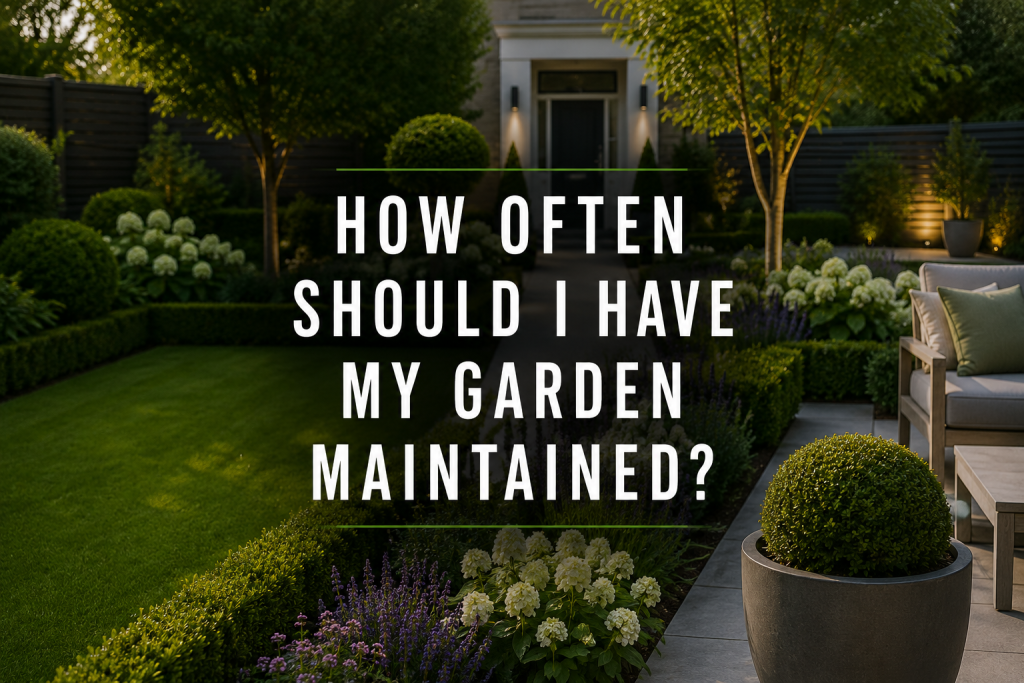
A well-designed garden is never truly “finished.”
Plants continue to grow, lawns need attention, weeds emerge, shrubs require pruning and the changing seasons constantly reshape the landscape.
One of the most common questions homeowners ask is:
“How often should my garden be maintained?”
The answer depends on the size of your garden, the type of planting and, most importantly, the standard you want to maintain.
The Best Maintained Gardens Rarely Look Like They Need Maintenance
This may sound contradictory, but it’s true.
One of the biggest misconceptions is that a garden only needs attention when it starts to look untidy.
In reality, the best maintained gardens never appear to need maintenance at all.
Why?
Because small issues are dealt with before they become large ones.
Lawns are cut before they become overgrown.
Weeds are removed before they flower.
Shrubs are lightly pruned before they lose their shape.
Beds are continually refined rather than being completely overhauled every few months.
If your garden regularly reaches the point where it obviously needs work, there is a good chance it isn’t being maintained frequently enough.
How Often Should a Garden Be Maintained?
There isn’t a single answer that suits every property, but as a general guide:
Weekly
Suitable for:
- Large gardens
- Formal gardens
- Properties with extensive planting
- Gardens that are expected to look immaculate year-round
Every Two Weeks
For most residential gardens, this is the ideal balance.
A fortnightly schedule allows enough time for meaningful growth while preventing the garden from becoming difficult to manage.
Most of our maintenance clients fall into this category because it provides excellent value while maintaining a consistently high standard.
Monthly
Monthly visits can work for:
- Smaller gardens
- Low-maintenance planting schemes
- Rental properties
- Clients who carry out small tasks themselves between visits
However, some seasonal tasks may require additional visits during periods of rapid growth.
Every Garden Has Different Seasonal Demands
Gardens don’t grow at the same rate throughout the year.
Spring and early summer often require considerably more attention than winter.
A professional maintenance programme adjusts accordingly by focusing on:
- Lawn care
- Seasonal pruning
- Weed management
- Feeding
- Plant health
- Deadheading
- Mulching
- Pest monitoring
This proactive approach keeps the garden healthy throughout the year rather than simply reacting when problems arise.
If you’re investing in your outdoor space, it’s also worth reading What Adds the Most Value to a Garden?, which explains where maintenance fits into protecting that investment.
A Gardener and a Maintenance Operative Are Not Always the Same Thing
This is an important distinction that many homeowners don’t realise.
Someone who carries out garden maintenance is not necessarily a gardener.
Likewise, a gardener is not simply someone who operates hedge trimmers, blowers and lawnmowers.
A skilled gardener understands:
- Plant identification
- Soil conditions
- Seasonal growth cycles
- Correct pruning techniques
- Plant health
- Pest and disease management
- Long-term development of the garden
By contrast, many maintenance operatives are highly capable at carrying out physical maintenance tasks such as mowing, hedge cutting and using power tools, but they are not necessarily trained or paid for their horticultural knowledge.
Neither role is inherently better—they simply perform different functions.
The best maintenance companies combine both practical maintenance skills and horticultural knowledge to ensure the garden not only looks tidy but continues to develop and improve over time.
Maintenance Protects Your Investment
A professionally landscaped garden represents a significant investment.
Without ongoing maintenance:
- Plants become overcrowded.
- Lawns deteriorate.
- Weeds establish themselves.
- Hard landscaping becomes stained.
- Drainage issues can go unnoticed.
- Small problems become expensive repairs.
Regular maintenance protects both the appearance and the long-term value of your garden.
If your garden includes natural stone paving, you may also find Why Does My Indian Sandstone Have White Marks On It? useful for understanding one of the most common concerns homeowners experience.
Should You Maintain Your Garden Yourself?
Many homeowners enjoy gardening and successfully maintain their own gardens.
Others simply don’t have the time.
Professional maintenance doesn’t replace the enjoyment of gardening.
Instead, it allows homeowners to focus on the parts they enjoy while leaving the more demanding or specialist work to experienced professionals.
The right approach depends entirely on your lifestyle, available time and the standard you want to achieve.
Choosing the Right Maintenance Company
When comparing maintenance providers, don’t focus solely on price.
Consider:
- Experience
- Horticultural knowledge
- Reliability
- Communication
- Qualifications
- Scope of service
- Long-term consistency
A slightly higher investment in the right company often delivers significantly better results over time.
The Royal Horticultural Society (RHS) provides excellent guidance on seasonal gardening practices and plant care, making it a valuable resource for homeowners interested in learning more.
Frequently Asked Questions
How often should grass be cut?
During the main growing season, most lawns benefit from being cut every one to two weeks, depending on weather conditions and growth rates.
Is fortnightly garden maintenance enough?
For many residential gardens, yes.
Fortnightly visits provide an excellent balance between cost and maintaining a consistently attractive garden.
What’s the difference between a gardener and a landscaper?
A landscaper typically designs or constructs gardens, while a gardener focuses on the ongoing care, health and maintenance of plants and outdoor spaces.
Can regular maintenance increase property value?
Indirectly, yes.
A consistently well-maintained garden improves kerb appeal, protects previous landscaping investments and creates a positive first impression for potential buyers.
Conclusion
The best maintained gardens rarely draw attention because they always look effortless.
That isn’t luck.
It’s the result of consistent, proactive maintenance carried out before problems become visible.
Whether you choose weekly, fortnightly or monthly visits, the goal should always be the same: to protect your investment, improve the health of your plants and ensure your garden continues to mature beautifully year after year.
If you’re planning a new garden as well as maintaining an existing one, you may also find How Do Landscape Designers Create Curb Appeal?, Porcelain vs Indian Sandstone, and Can a Landscaper Help With Poor Drainage in My Garden? helpful as you begin planning your outdoor space.